
Our Crowdfunder campaign is now LIVE. We're raising £40,000 to help communities discover, monitor and care for the changing marine wildlife on their local coastline. Click here to find out more.
January 30, 2026
.jpeg)
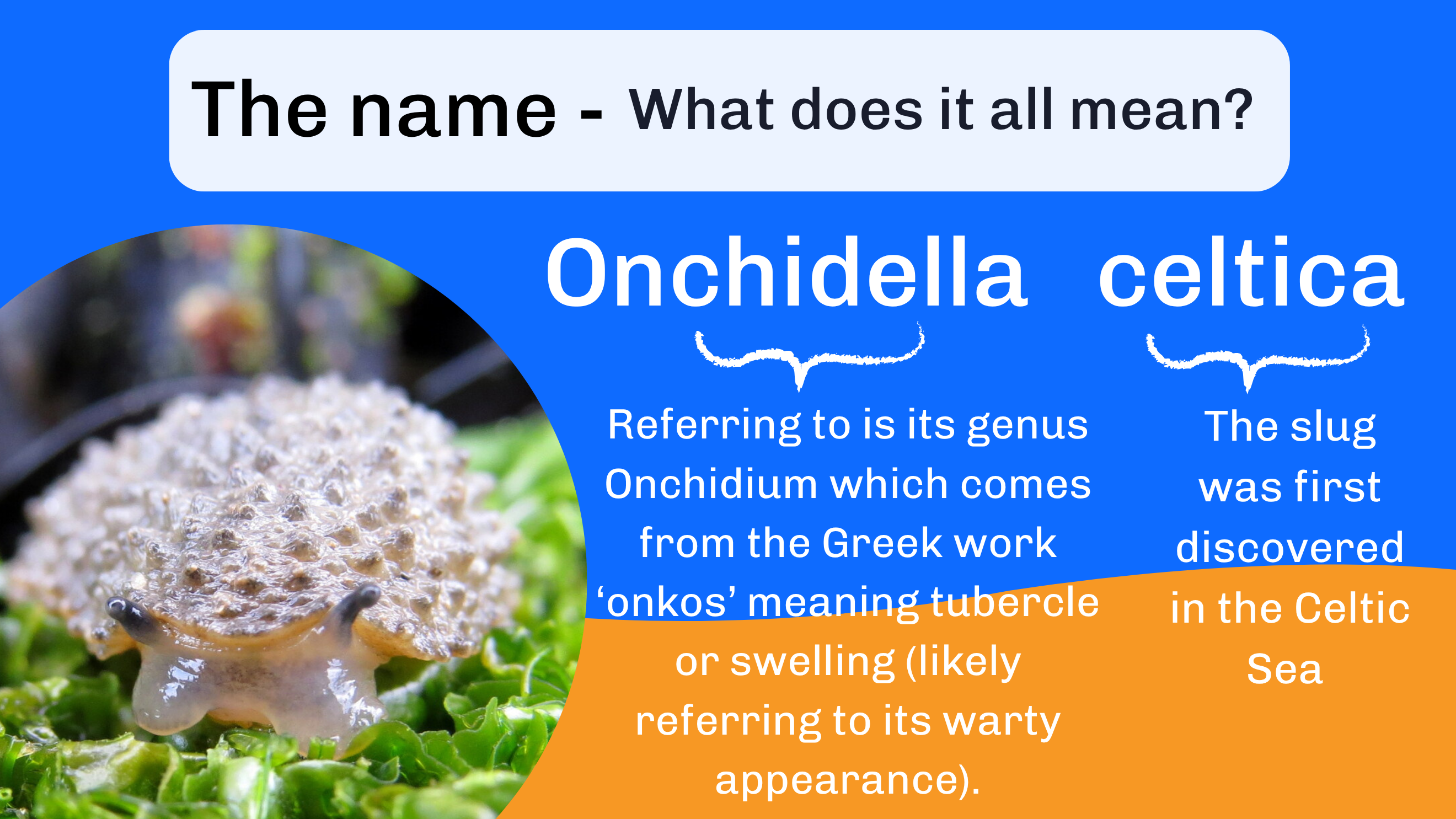
Onchidella celtica, commonly known as the Celtic Sea Slug was first described by Cuvier in 1817. They are most abundant in the South-West and Channels of the UK, with fewer records in the North of the UK. part of its British distribution in Devon, Cornwall and the Channel Islands. Currently, there are around 400 research-grade observations from iNaturalist and over 25,000 observations from Global Biodiversity Information Facility (GBIF).
The Celtic sea slug is in the subclass heterobranchia like other sea slugs. However, unlike other true sea slugs (opisthobranchs), the Celtic sea slug is in the order Systellommatophora, these are lung-bearing or 'pulmonate' marine gastropod molluscs which breathe air ('pulmo' means lung in latin). The Systellommatophora order contains two superfamilies; Onchidioidea, which are primarily marine, and Veronicelloidea which are primarily terrestrial. They're all primitive air-breathing slugs which actually evolved from true sea slugs. Hence Celtic sea slugs, which are from the Onchididoidea superfamily, are fome from a lineage of slugs that left the ocean, evolved lungs and then returned to the marine environment!
This means unlike most sea slugs, the Celtic sea slug is typically found in the high tide zone and only comes out of its crevices at high tide, about an hour after their rock face has been observed to forage, retreating when the tide comes in. It is rare for them to travel more than a metre from their chosen hide when foraging.
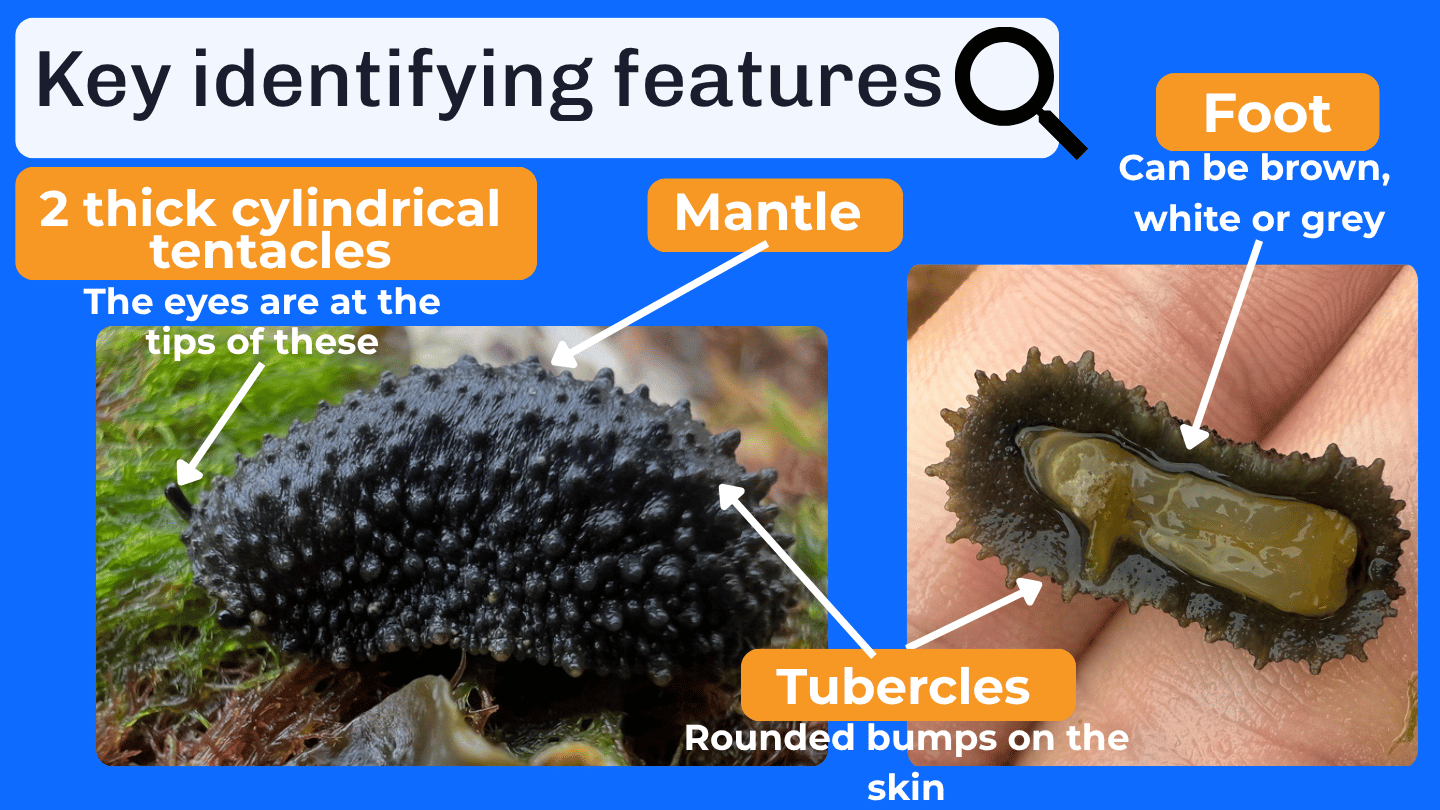
The Celtic sea slug is small, shell-less and ovaloid but solid, reaching a maximum length of around 13 mm and a width of 6 mm. They have a dark, fleshy mantle (often coated in sand), with large evenly spaced coarse and conical tubercles. When stationary, the mantle can completely cover the two short tentacles, head and foot. These come out from under the mantle when the slug is moving. They are quite unmistakable from any other species of slug that may be found in the UK.
The mantle cavity acts as a lung as the slug has no gills.
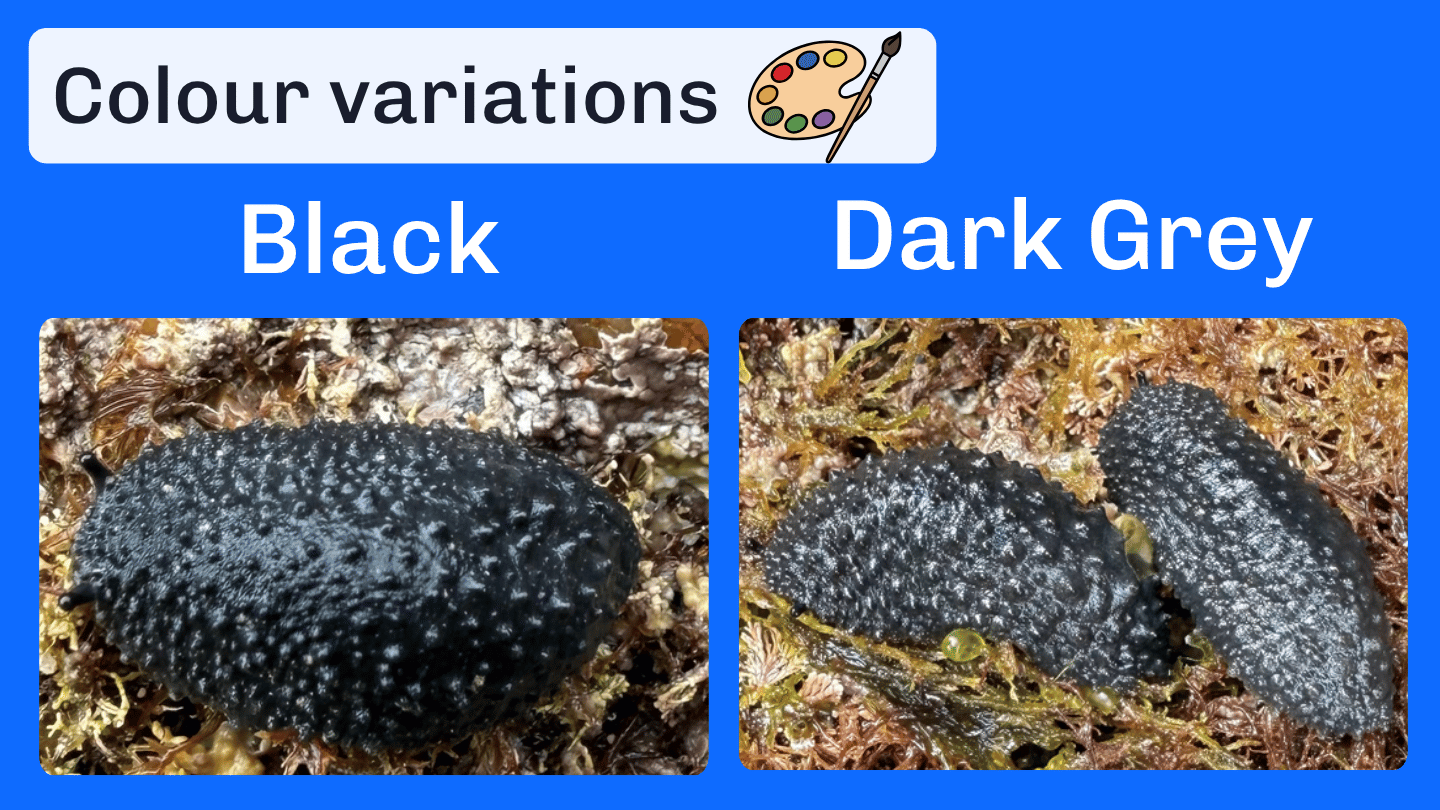
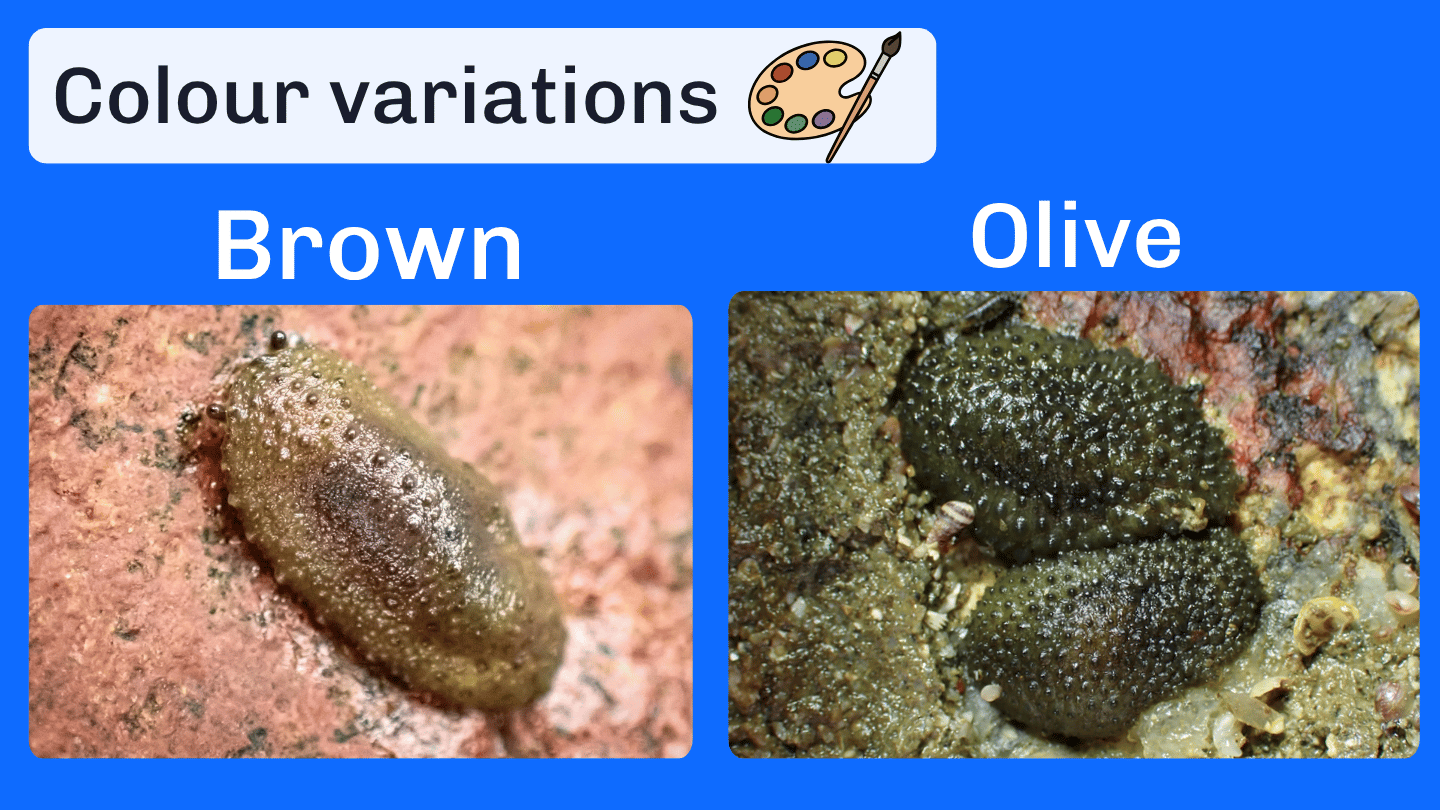
They are primarily black in colour, but occasionally spotted to be grey, brown and even dark grey. They always have the same key identifying features, so make sure to look for their bumpy tubercles! The reasons for the changes in colouration are not fully known but as individuals living in the same area tend to share the same colouration, it is thought perhaps to be due to diet though age may also have an influence.
The Celtic sea slug can be found on exposed rock but thrives in damp and humid conditions, hence it often hides within barnacles, among honeycomb worms, or in small crevices. These are typically submerged at high tide, begging the question how these air-breathing animals survive in that time. They can shut off their lungs and survive through their ability to absorb some oxygen through their mantle, which may give them enough oxygen to survive when inactive. However in some cases, the crevices they inhabit may retain small air-pockets at high tide, from which these slugs can breathe. They are mainly observed between April and November and seem to hibernate, almost entirely inactive, the rest of the year out of sight in empty barnacle shells and crevices as you can see below!
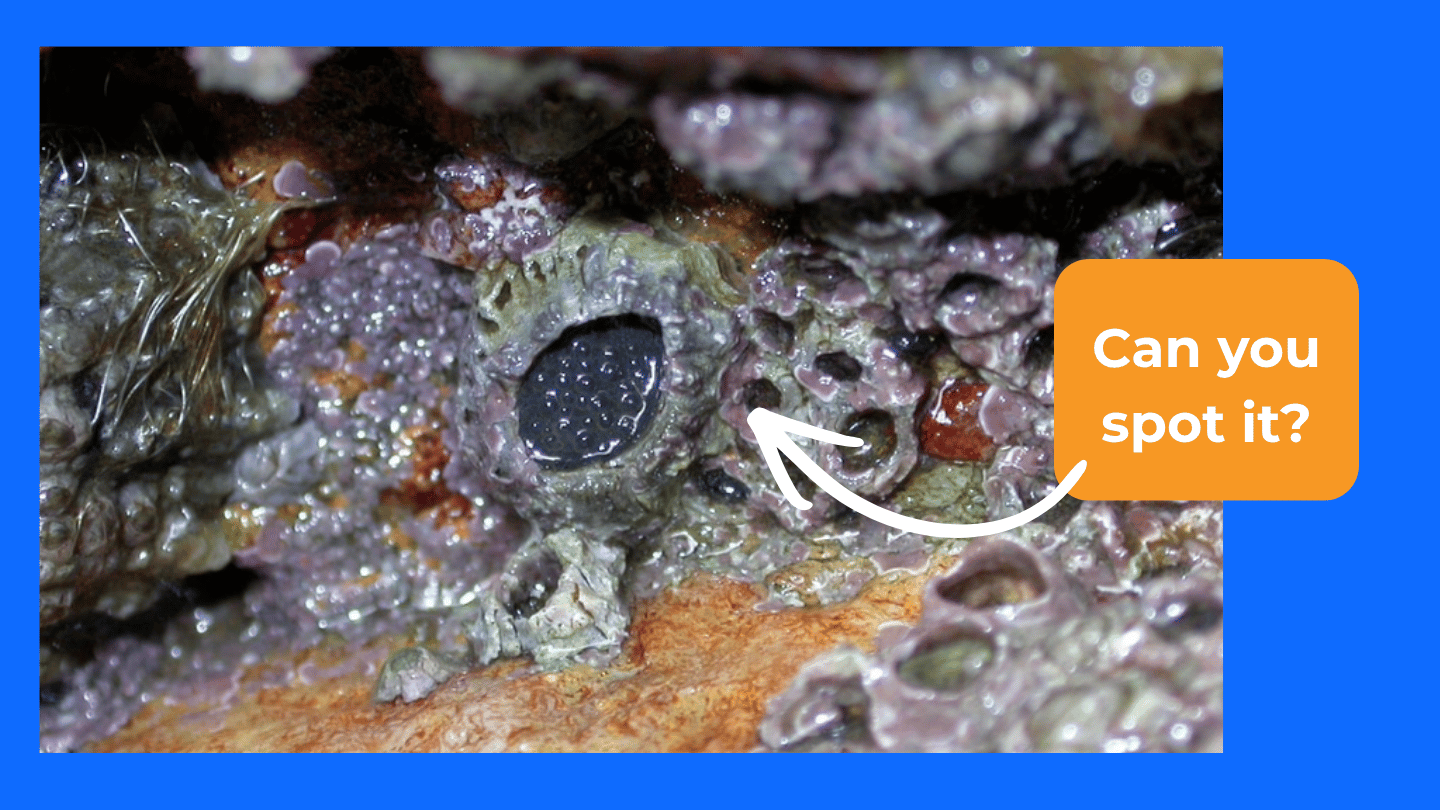
They live in groups of two or three individuals up to 60.
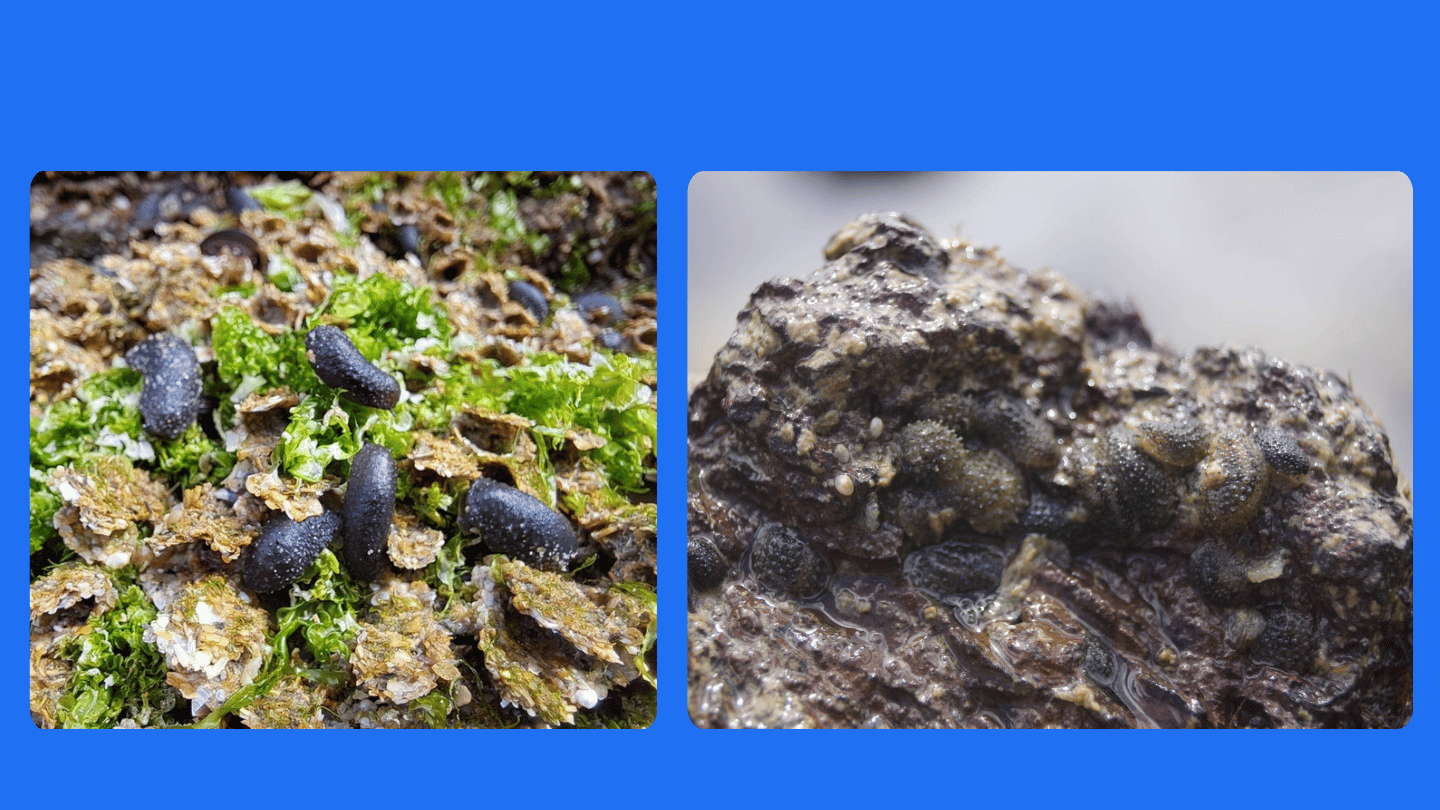
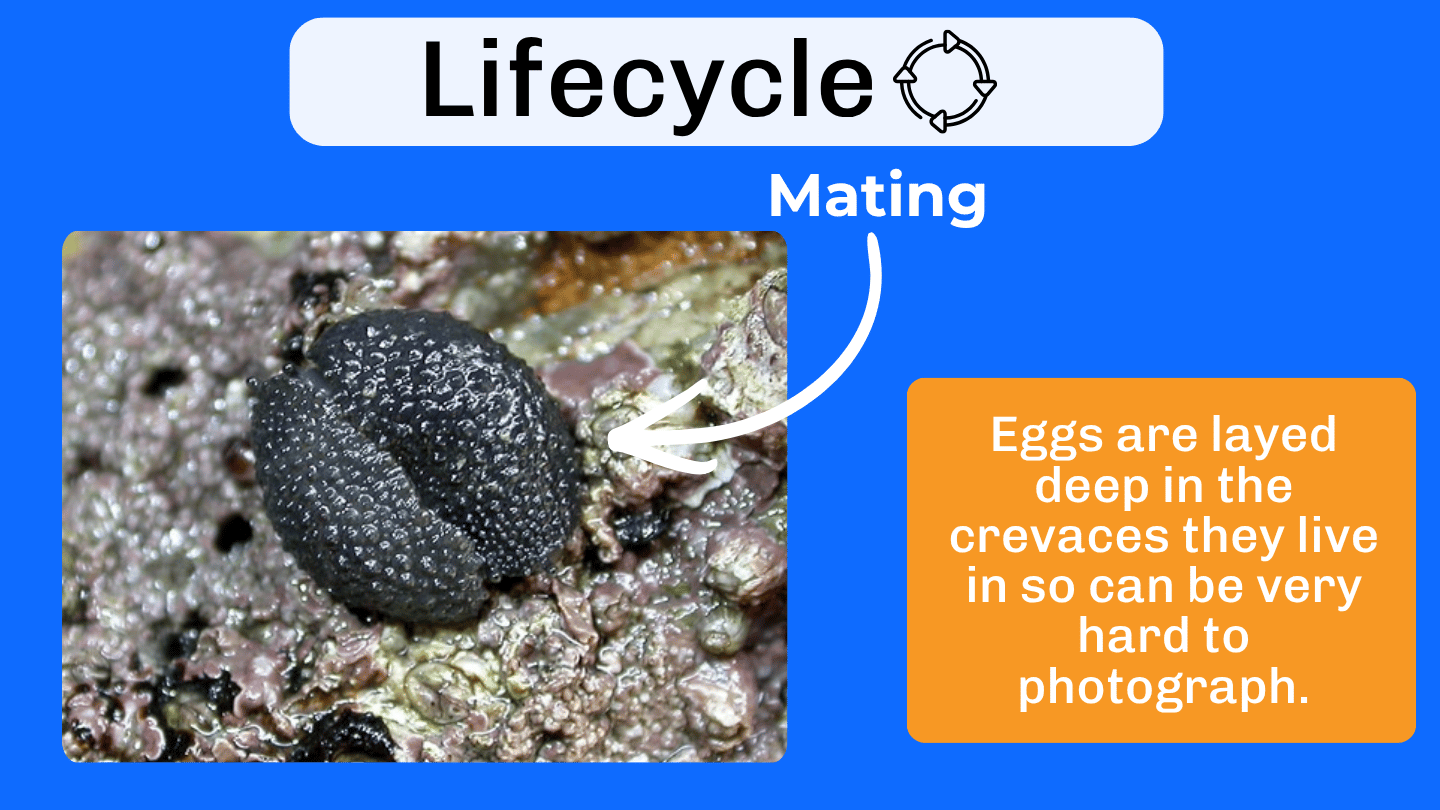
Celtic sea slugs have both male and female reproductive organs meaning they can fertilise each other at the same time when mating, which takes place from July to September. To do this they line up right side to right side and exchange sperm. Then, they lay 60-100 tubular egg capsules connected by fine strands in a jelly mass in the crevices they inhabit. Unlike true sea slugs, which lay eggs that hatch to a planktonic 'veliger' stage before metamorphosing to true slugs, the celtic sea slug larvae have this 'veliger' stage within their egg and emerge as almost fully formed slugs from their eggs no longer than 1.3mm.
Once the tide is low, they forage for various algae, typically small to microscopic species including diatoms (single celled algae), and biofilms of bacteria. They will often rasp their prey off beds of mussels and barnacles. Once they have retreated back to their crevices at high tide, they will digest the contents of their stomach. Digestion is aided by the sand and detritus they ingest while feeding which helps grind the algae in their stomachs.
Observed predation events of this slug are rare, they have a tough mantle and reside hidden in crevices at high tide when most predators are active. Additionally, the rim of their mantle is studded with papillae which are connected via ducts to chemical producing glands. This means they can squirt out a spiralling coil of foul white chemicals when disturbed to deter crabs, anemones and other predators.
These slugs are at their Northern most range in the UK, not reaching much further up the coast than Devon. From the UK, tehir range extends southward down the West coast of Europe along France, Spain and Portugal. There have even been some recorded in the Azores and Tenerife! For the most up-to-date distribution records, see:
National Biodiversity Network (NBN) - Europe (mostly UK) database of species occurrence
iNaturalist - most up to data records of the species occurrence
Celtic sea slugs have been proven to exhibit a homing ability, returning to the same crevice from wherever they are foraging each time the tide comes in! They do not always follow the same route back that they left in so it is not known exactly how these slugs do this!
Barfield, P., (2003). Notes on the history of the celtic sea slug; Onchidella celtica (Cuvier, 1817). Porcupine Newsletter, 13, 10-12.
Rowley, S.J. (2005). Onchidella celtica Celtic sea slug. In Tyler-Walters H. and Hiscock K. Marine Life Information Network: Biology and Sensitivity Key Information Reviews, [on-line]. Plymouth: Marine Biological Association of the United Kingdom.
Fretter, V. (1943). Studies in the functional morphology and embryology of Onchidella celtica (Forbes and Hanley) and their bearing on it’s relationships. JMBA UK, 25, 685-726.
Russell, F.S. (1925). On the Occurance of Onchidella celtica (Cuvier) on the Cornish Coast. JMBA UK, 13, 981-982.
Tween, T.C. (1987). On the occurance, ecology and behaviour of Onchidella celtica in the littoral of Cornwall. Thesis, Luton College of Higher Education, 525p.
Fernández-Gutiérrez, J. et al. (2023). Anatomical study of Onchidella celtica (Gastropoda, Eupulmonata, Onchidiidae) by micro-computed tomography (micro-CT). A first approach to its use in Onchidiidae (Gastropoda, Eupulmonata). Nova Acta Científica Compostelana, 30. ISSN-e: 2340-0021.


