
Our Crowdfunder campaign is now LIVE. We're raising £40,000 to help communities discover, monitor and care for the changing marine wildlife on their local coastline. Click here to find out more.
February 13, 2026
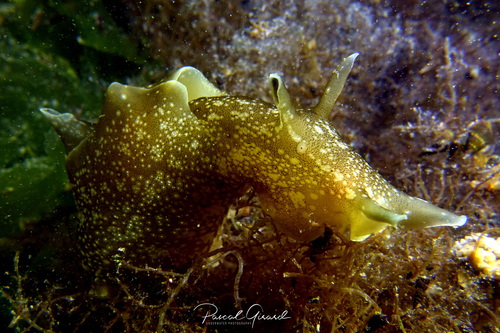
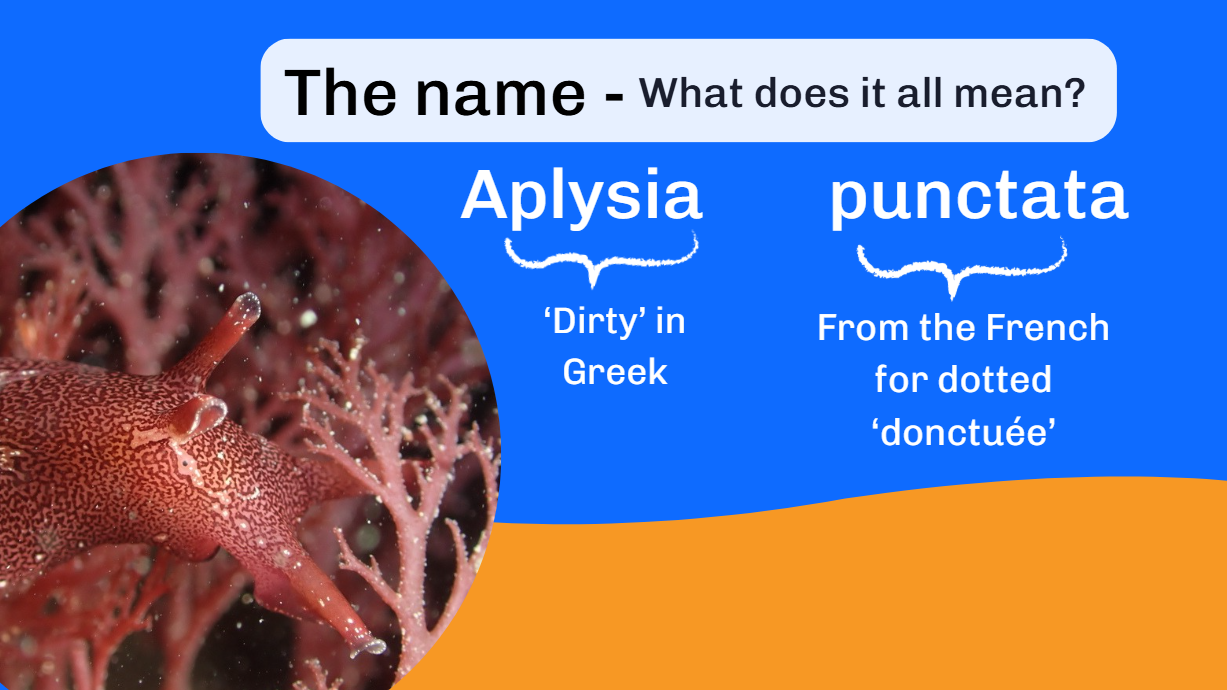
Aplysia punctata, commonly known as the Spotted Seahare, or Dotted Seahare, was first described by Cuvier in 1803. They have a wide distribution and are commonly found around Europe and North Africa. Currently, there are over 1,500 research-grade observations on iNaturalist and over 6,000 from the Global Biodiversity Information Facility (GBIF).
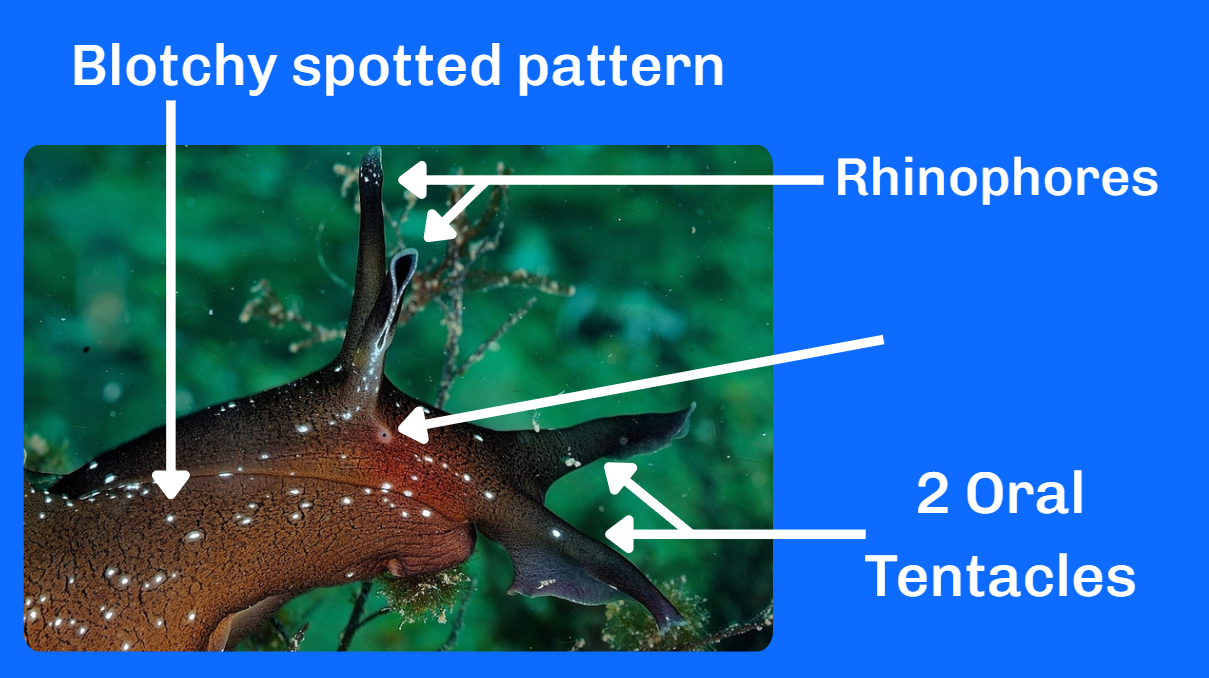
Sea hares are large and very distinctive, particularly when underwater. Their upright rhinophores (sensory tentacles) and broad, oval oral tentacles are clearly visible and give them their common name, as they resemble the ears of a hare.
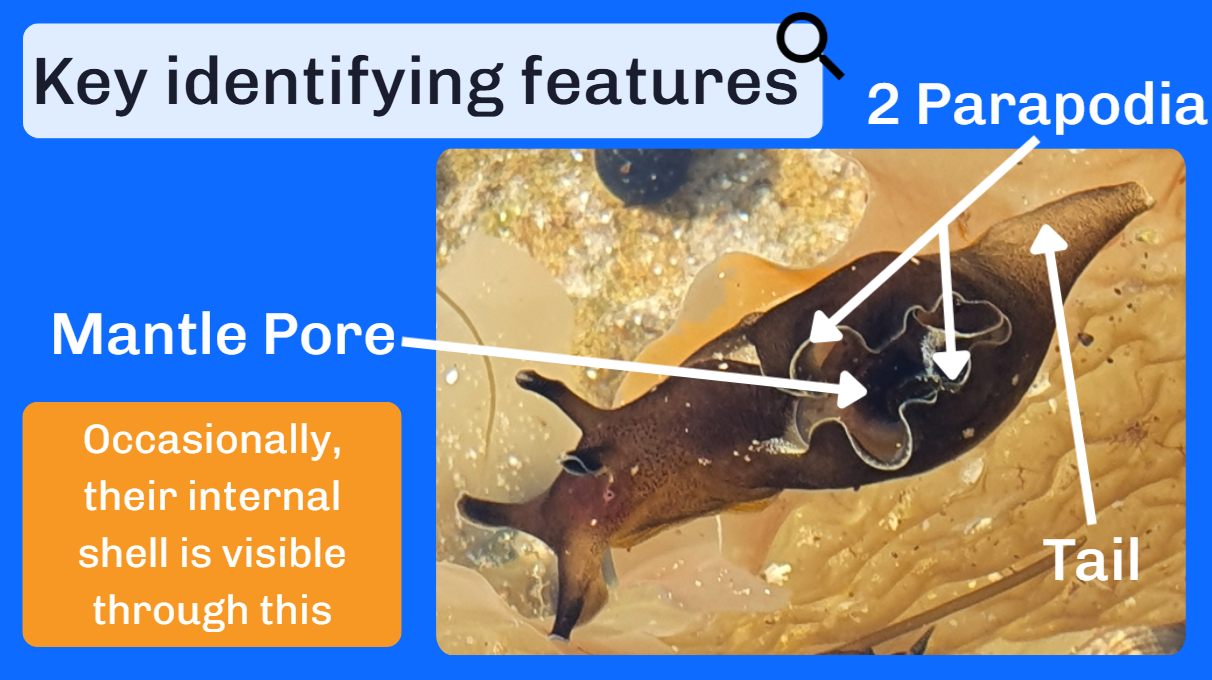
They also have two large fleshy lobes called parapodia along the sides of their body which join high high posteriorly (quite far forward). These parapodia can be used for swimming to allow the seahare to glide briefly through the water. When the parapodia are spread open, the thin internal shell may sometimes be visible.
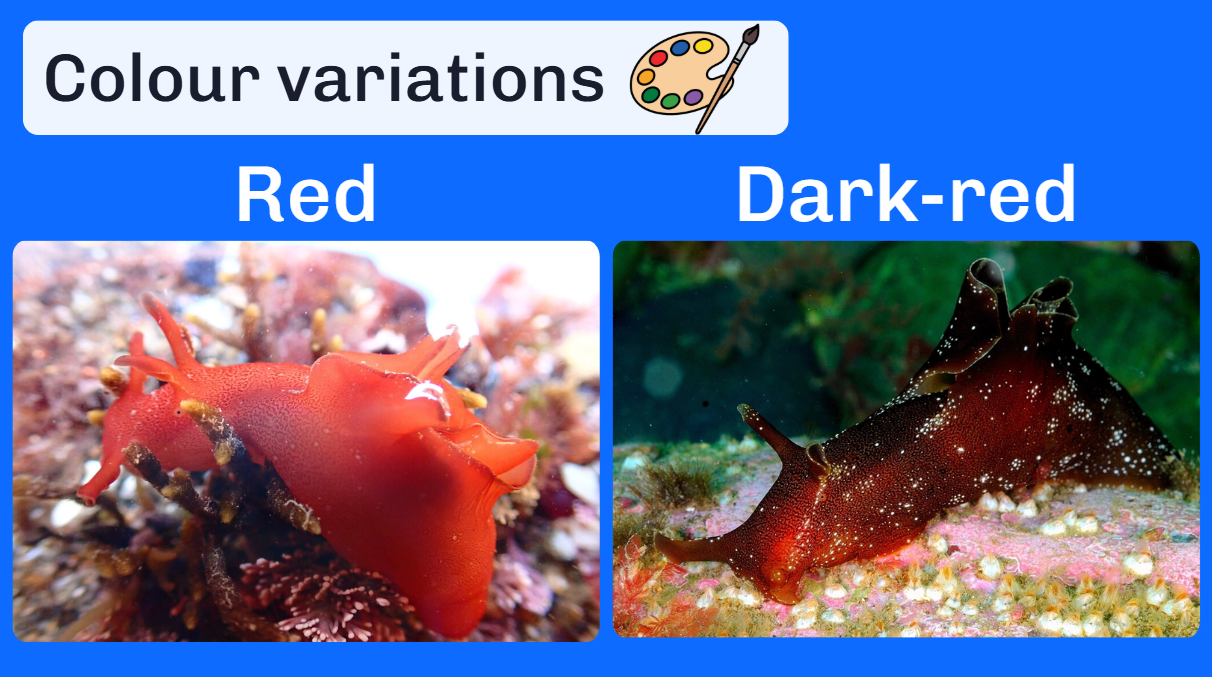
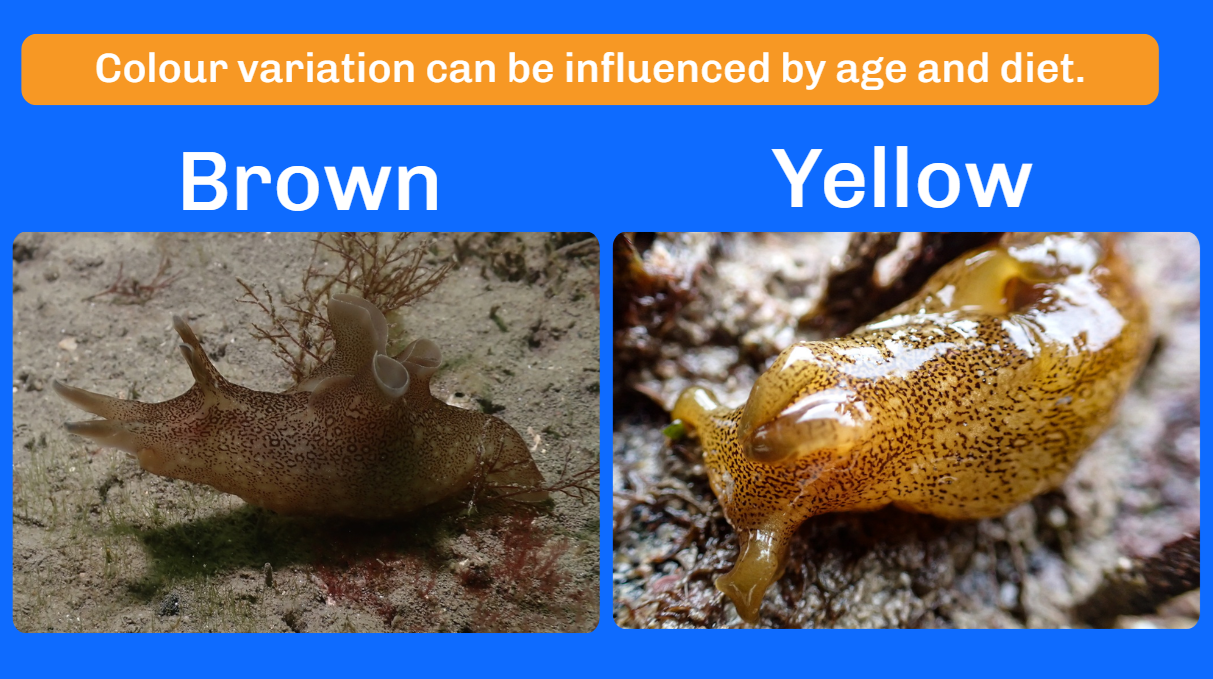
Sea hares show noticeable colour variation from red to dark brown and sometimes yellow, which is influenced by both age and diet, and helps them blend in with the algae they are feeding on.
Juveniles feed predominantly feed on red algae resulting in red in colouration. As they mature, their diet often shifts toward brown seaweeds, meaning adults are often brown. Diet is considered the main factor influencing their colouration. Many individuals also have grey, white, black or dark brown/ red circular or oval light or dark rings, spots or mottling across their bodies.
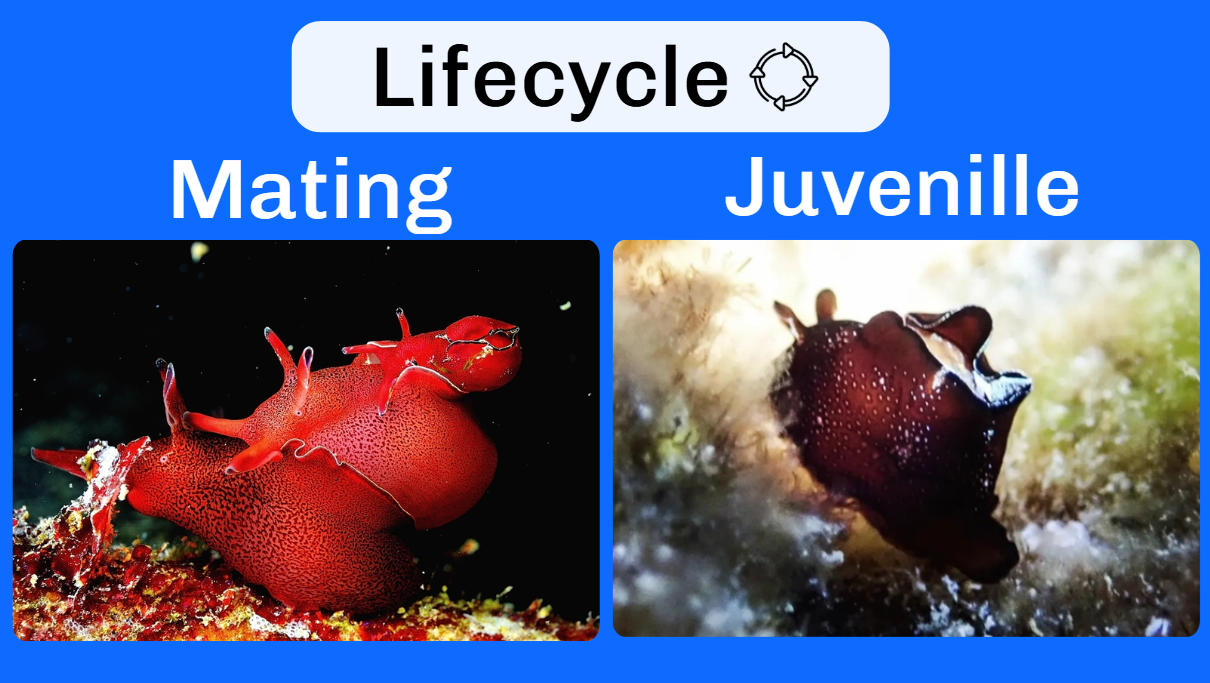
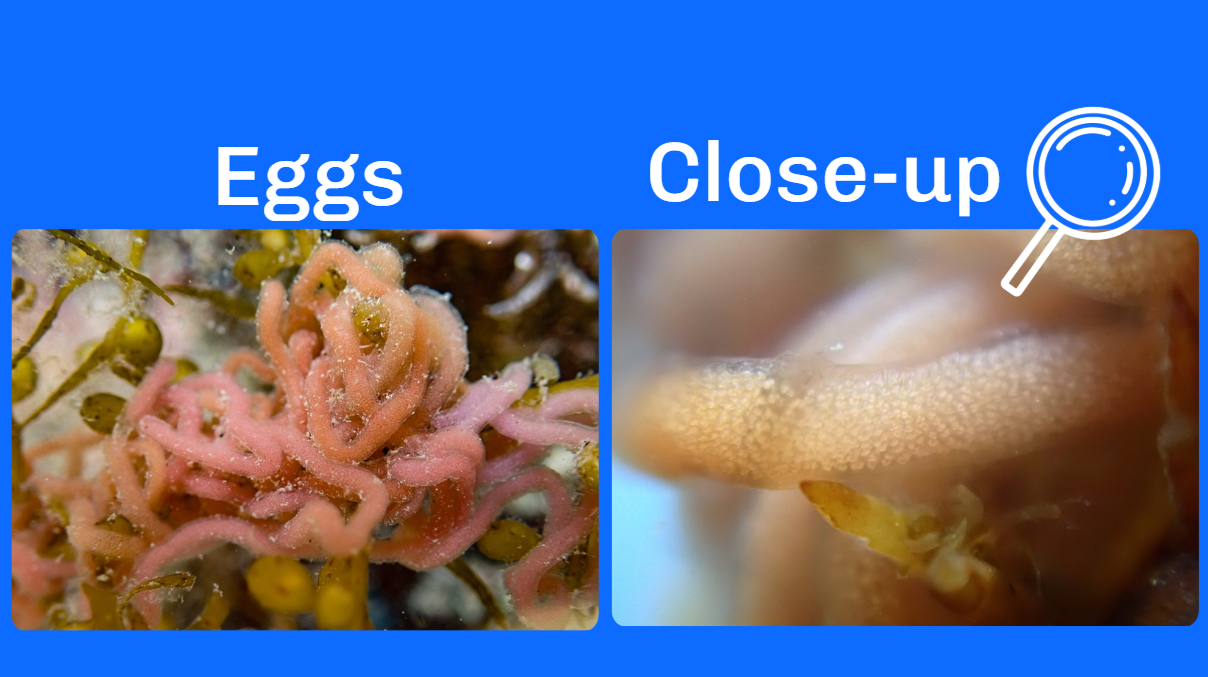
Sea hares breed during the spring, when their populations often increase noticeably. During this period, individuals can lay thousands of eggs held in long, pink, spaghetti-like membrane ribbons.
Sea hares are hermaphrodites, meaning each individual has both male and female reproductive organs (their penis is actually on the right side of their head!). However, they still mate with other individuals to reproduce. During breeding, they often form chains, where one individual acts as a female, another as a male, and middle individuals can act as both simultaneously. These breeding chains can sometimes involve several sea hares lined up together.
After the breeding season, all the adults die, as their maximum lifespan is only one year. The larvae hatch from the eggs and develop through a planktonic stage before settling and growing rapidly. By the following spring, adults can reach lengths of up to 20 cm.
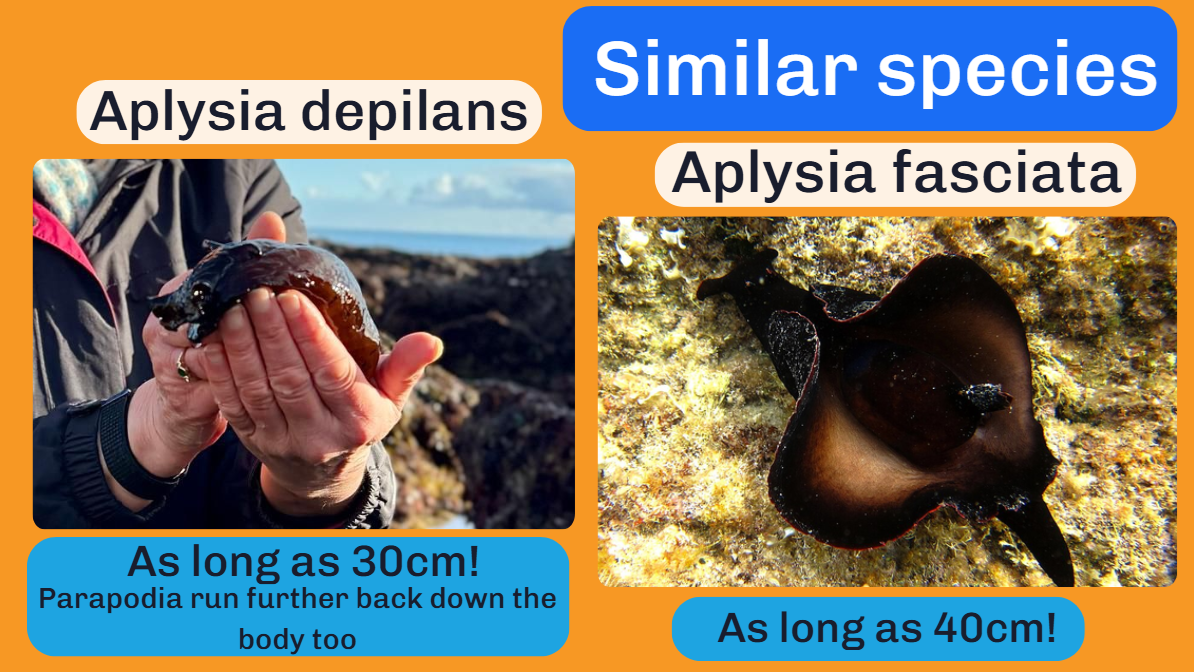
Sea hares belong to the genus Aplysia, which contains several species that can look very similar to one another at smaller sizes. Because of this, identification can occasionally be challenging. The vast majority of sea hares in the UK are Aplysia punctata, as that is our only native Aplysia species. A. depilans and A. fasciata are species from warmer waters that are found more rarely in the UK, and grow to considerably larger sizes which is the main identifying feature.
It is easiest to tell the difference at smaller sizes when the slug is underwater, this allows you to see more clearly how far along the body the parapodia run (further toward the tail in A. depilans and A. fasciata). A fasciata especially also has larger and more open parapodia, often with a red border (which A. punctata doesn't have),to increase their swimming abilities and is found most commonly in shallow waters in the open ocean rather than rockpools. A. depilans has a broader foot and wider face with stumpier rhinophores, giving it a more 'hippo-like' appearance.
A. punctata has the largest and most obvious mantle pore through which you can see the shell of all 3 species.
Sea hares have a range of potential predators, including crabs, fish, and starfish. However, no species is known to specialise in feeding primarily on sea hares. Instead, they are usually eaten opportunistically and only occasionally. Predators are more likely to consume eggs or juveniles rather than fully grown adults.
Sea hares possess several defence mechanisms that reduce their risk of predation. One of the most well-known is their ability to release a cloud of purple ink when threatened. This ink contains the chemical opaline which is both distasteful and mildly toxic to many animals. It can also interfere with a predator’s sense of smell and taste through clogging up antennae etc., sometimes causing hesitation or changes in behaviour that allow the sea hare time to escape.
Sea hares feed primarily on algae, and their diet influences both their growth and their colouration. By consuming green, red, and brown algae, sea hares can match the colour of their surroundings, providing effective camouflage from predators.
Studies have shown that sea hares achieve the best growth rates when feeding on certain algae species, including Sea Comb (Plocamium cartilagineum) and Gutweed (Ulva intestinalis). The body’s ability to change colour depending on the algae consumed helps them blend seamlessly into their environment.
- Sea hares are technically sea snails, as they possess a fragile internal shell.
- Sea hares can eat up to a third of their bodyweight a day in algae.
- Research on an American species of sea hare (Aplysia californica) revolutionised our understanding of memory, learning, neural plasticity and habituation. It makes the perfect cornerstone model for neurobiology as it has large identifiable neurons and a simple nervous system. It has lead to several improvements in treatment for neurogenerative diseases.
For the most up-to-date distribution records, see:
National Biodiversity Network (NBN) - Europe (mostly UK) database of species occurrence (best for historical records).
iNaturalist - most up to data records of the current species occurrence.
Barnes, H.(1963). Oceanography and marine biology. Aberdeen: Aberdeen University Press.
Picton, B. & Morrow, C. (2023). Nudibranchs of of Britain, Ireland and Northwest Europe (2nd ed). Princetown University Press.
Carefoot,T. H. (1967). Studies on a sublittoral population of Aplysia punctata. Journal of the Marine Biological Association of the United Kingdom 47(2): 335–350.
Carefoot,Thomas H. (1967). Growth and Nutrition of Aplysia Punctata Feeding on a Variety of Marine Algae. Journal of the Marine Biological Association of theUnited Kingdom 47(3): 565–589.
Carefoot,T.H., Pennings, S.C., and Danko, J.P. (1999). A test of novel function(s)for the ink of sea hares. Journal of Experimental Marine Biology and Ecology234(2): 185–197.
Sabatini, M. (2008). Aplysia punctata Dotted sea hare. In Tyler-Walters H. and Hiscock K. Marine Life Information Network: Biology and Sensitivity Key Information Reviews, [on-line].Plymouth: Marine Biological Association of the United Kingdom. [cited20-02-2026]. Available from: https://www.marlin.ac.uk/species/detail/2017


