
Our Crowdfunder campaign is now LIVE. We're raising £40,000 to help communities discover, monitor and care for the changing marine wildlife on their local coastline. Click here to find out more.
February 16, 2026
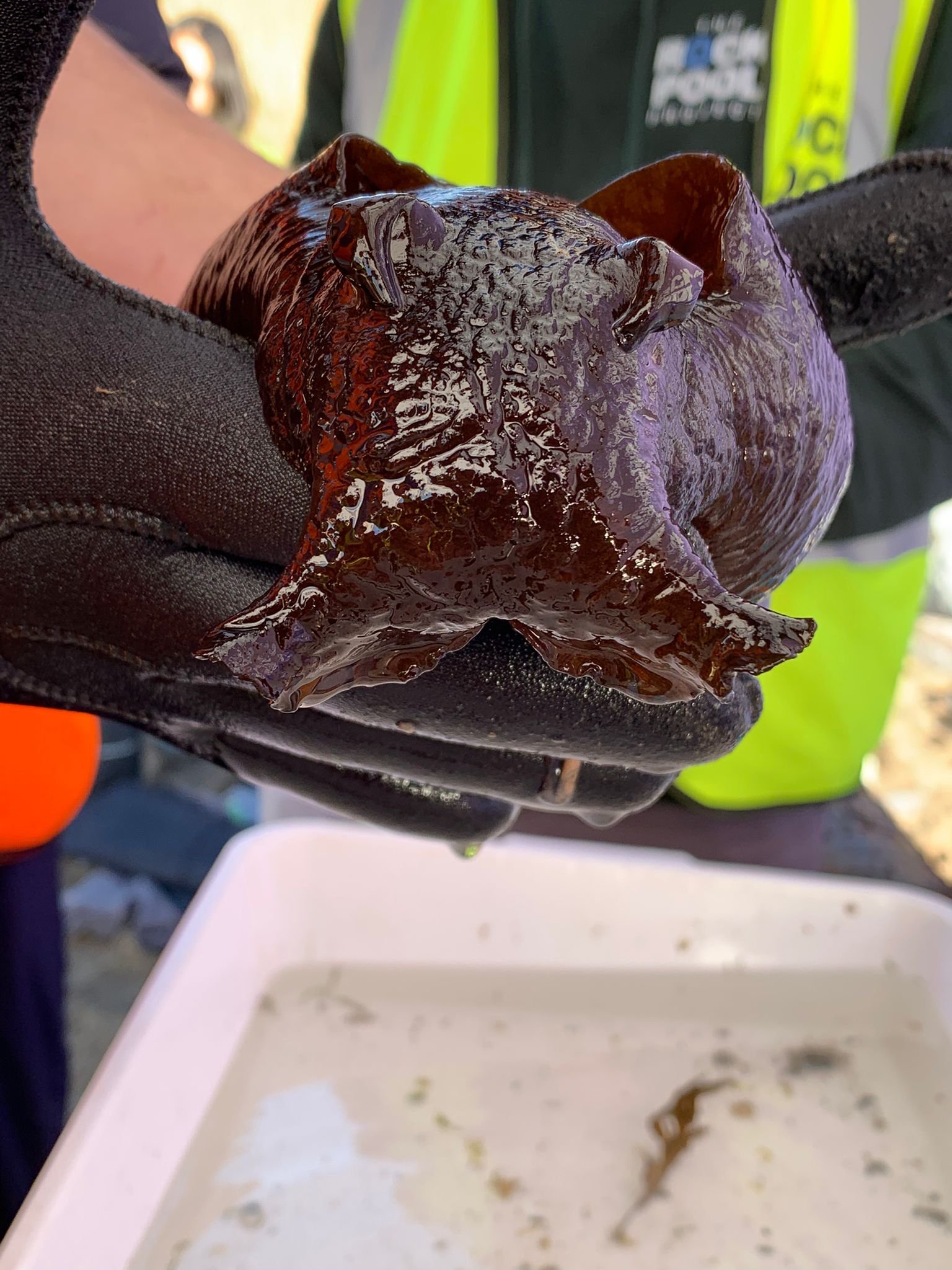
Every month the Mount Batten hub makes our way to the beach for our monthly Big Rock Pool Challenge event, where we invite the public to join us in exploring the rock pools with a timed BioBlitz Battle, and November had been no different.
With everyone eager to take advantage of the 0.8 metre tide we set off to explore the rock pools that the retreating tide left exposed and very quickly began to find a wide variety of wildlife, ranging from Green Shore Crabs and Montagu's Crabs to Star Ascidians and Rock Gobys, all the while I was hoping to stumble across the now infamous Hair Curler and Rainbow Seaslugs that had been seen previously at Wembury.
As the tide continued to retreat we soon found ourselves exploring the lowest parts of the beach, where we normally find some of our favourites, such as firey Velvet Swimming Crabs and the ever charismatic Sea Lemons, I was yet to find one of the elusive nudibranchs I had hoped to find.
Time was running out and it was looking like I'd be going home slugless when I was approached by one of our youngest participants who was very excited to show me something weird he'd found.
Leading me over to a nearby part of the beach that we often like to call "Crab Lagoon", he pointed to a small rocky alcove that looked like it had been invaded by a massive blob of 'something?'.
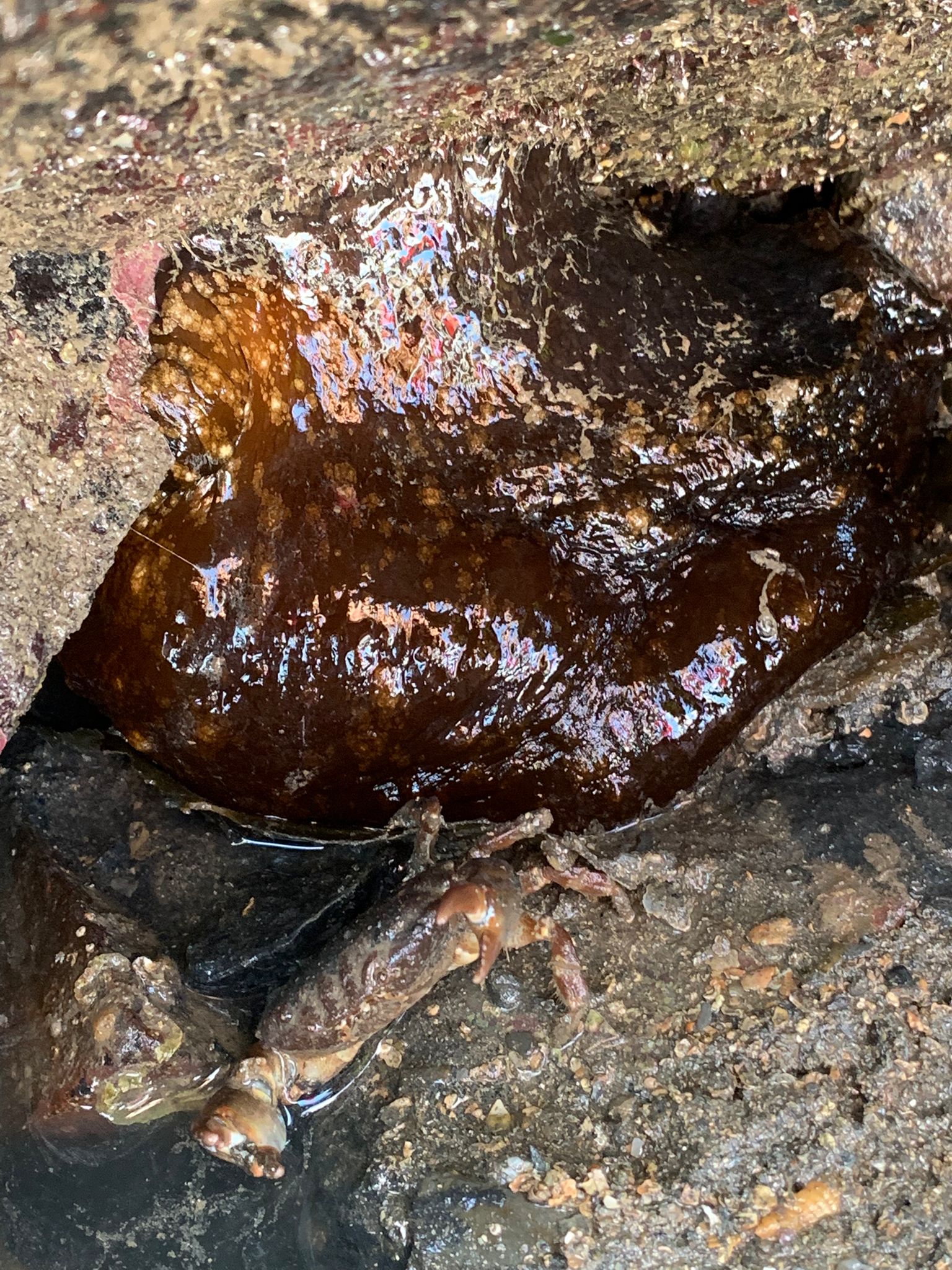
Initially I had thought that the 'something' had been an anemone from the way it was curled up but I couldn't think of an anemone that looked like that. Calling over another volunteer (Kate, who took some incredible pictures for us) we decided I needed to get a better look with my gloves.
Quickly returning with my gloves I slowy and carefully eased the thing off of its rock. Eventually letting go I transfered the blob into a bucket filled with water.
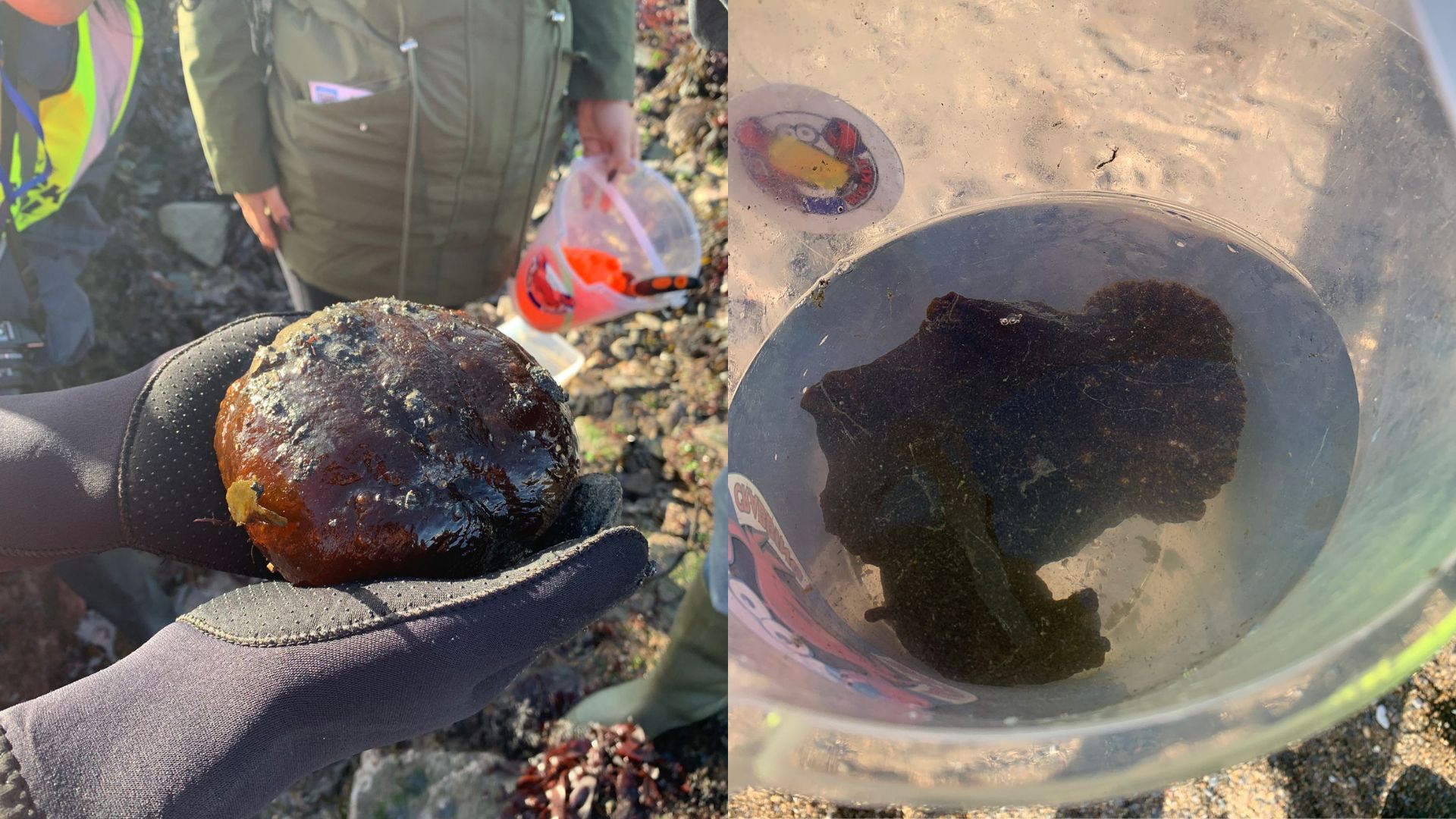
Watching as the thing slowly unfurled we quickly came to the conclusion that the 'something' was infact a sea hare and a rather large one at that. The size of this sea hare, which couldn't fully unfurl in the bucket, led us to our next question. What species of sea hare was it?
The native Spotted Sea Hare (Aplysia punctata) is able to grow up to 30 centimetres but is normally quite slim. The sea hare in our bucket was a fair bit larger and heavier which led to the quick decision to take it back to our ID station at the top of the beach.
Arriving at the top of the beach I quickly learnt we were not only ones to have found one of these giant slugs, as another family had found one and were currently working to ID it as well.
As a group we came to the conclusion that the pair of sea hares was one of two different species; the Depilatory Sea Hare (Aplysia depilans) or the Sooty Sea Hare (Apylsia fasciata). Both of which are large sea slugs capable of swimming and that had been known to appear in the UK on occasion.
Following our event we reached out to a specialist in marine mollusc identification through iNaturalist for some help in identifying the hares. With this help we were finally able to identify the species from a key feature: the conjoined parpapodia (the flaps on the animals back) which indicated Aplysia depilans.
These sea hares are a non-native species of sea slug normally found in the eastern Atlantic and Mediterranean but have been known to appear around the UK. They are rarely found intertidally but can be trapped by the tide. They are most commonly found at a depth of ~10m metres and eat Ulva seaweeds.
Unlike our native sea hares, the Spotted Sea Hare, Depilatory Sea Hares can grow up to 40 centimetres long and can weigh up to 380 grams. By using their parapodia like wings, these sea hares can swim through the water in fairly clumsy fashion.
When startled they can produce a purple mucus that will stain your skin and was once believed by the ancient Greeks to cause your hair to fall out (please do not worry, my hair had already done so long before I handled the one above).
While I have yet to find a Hair Curler or Rainbow sea slug, being part of such a unique find has been a very unique experience as news of these slugs has now made it's way around the country. This news, and interviews with both the MBA and BBC, has made these slugs somewhat famous in our little rock pooling world and has left a lasting memory for me.
If you are eager to make your own unforgettable finds or simply feel inspired to go and check you local rock pools, why not check out when our next Big Rock Pool Challenge events are happening and come and join in the fun?


